
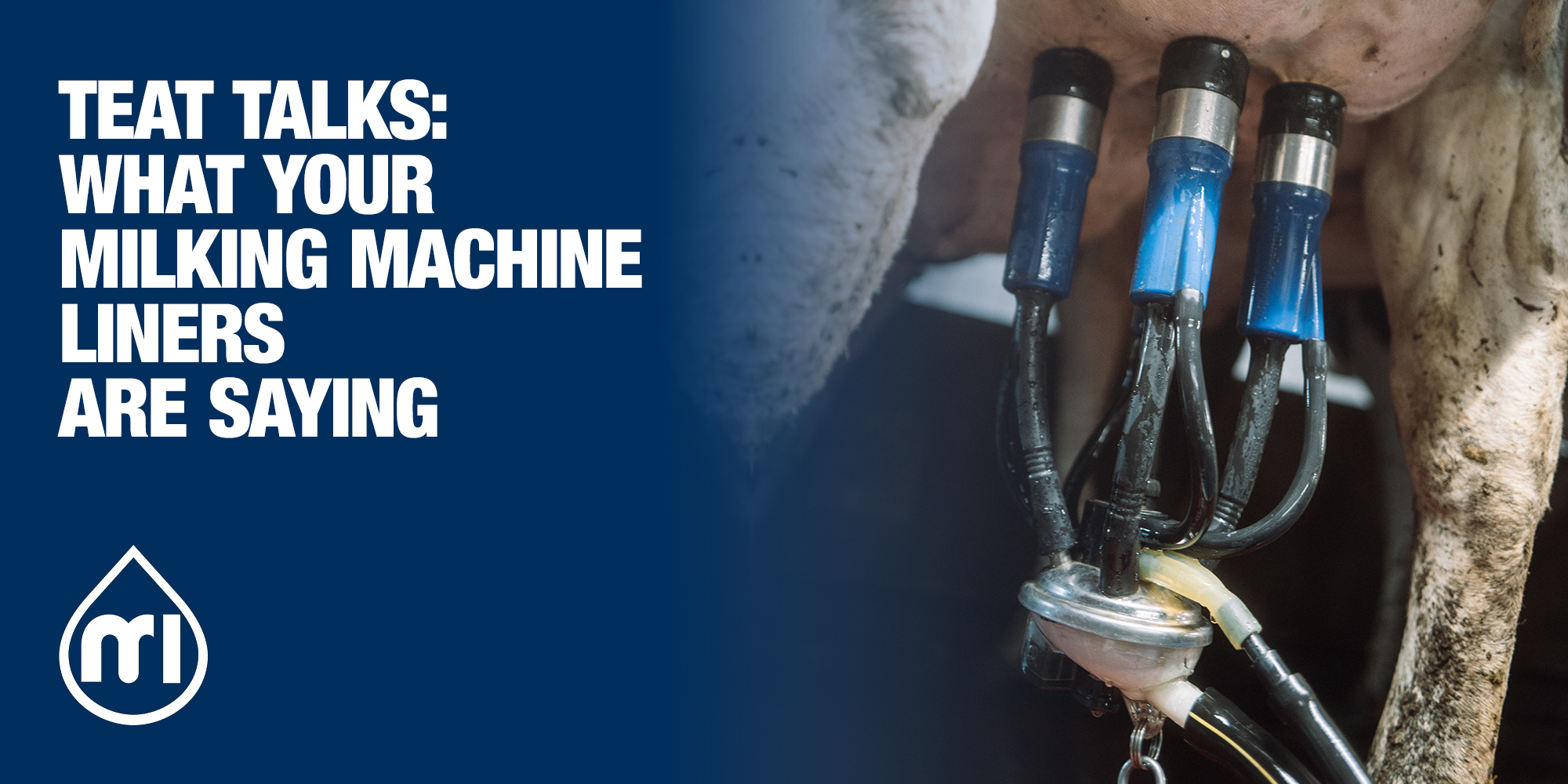
Teat talks: what your milking machine liners are saying
Listen to this article!
Every day, twice a day, like clockwork and ritual combined, the milking parlor comes to life. Clusters are ready, cows queue with a mix of habit and hope, and the milkers take their places.
And yet, within this daily rhythm, a conversation unfolds. It’s not spoken aloud, it is murmured in the soft hiss of vacuum lines, whispered through the sigh of rubber, and answered through the state of the cow’s teat.
If your liners could talk, they’d have plenty to say. Not just about the milk they helped extract, but about how gently, efficiently, and respectfully they did it.
They would talk about comfort and pressure, rhythm and timing. And the cows? They’re speaking too, through their behavior, the feel of their teats, and the invisible but profound language of tissue.
The question is not whether there’s a conversation happening in the parlor. The question is: are we listening?
Liners: the most intimate interface
Among all the sophisticated parts of the milking machine, the liner might seem the humblest. A simple sleeve of rubber or silicone, changed every few weeks, rinsed after each milking, barely noticed until it fails.
But this modest piece of equipment holds enormous power. It is the only part of the machine that directly touches the cow. In those 4-6 minutes when the cluster is attached, the liner becomes the interface between animal and technology, biology and engineering.
Research shows that up to 80% of the physical impact on the teat during milking comes from the liner’s action: its vacuum seal, its pulsating rhythm, its ability to massage or mistreat, to protect or provoke.
The health of the teat, and in turn the udder, is determined not just by hygiene and timing, but by the shape, age, and behavior of the liner.
A good liner knows its job well: it holds, it flows, it releases. But a poor liner, or a good one pushed past its limits, can become a silent saboteur. And while it cannot shout, the signs it leaves behind are loud and clear to those who know how to look.
The language of the teat
Cows don’t complain out loud, their teats tell the truth. Every dairyman who’s walked the exit lane after milking has seen the signs, some subtle, others glaring.
A swollen, darkened teat often signals excessive vacuum or a milking session that went on too long. The congestion is not just discomfort; it’s a bruise on a vital organ. Research confirms that prolonged vacuum exposure, especially when milk flow has already stopped, can lead to edema and trauma.
A rough ring around the teat end, that callused circle we call hyperkeratosis, is more than a cosmetic issue: it is a warning flag. It means the tissue has been repeatedly stressed, often due to liners that have lost their elasticity or been poorly matched to the teat size. Research by Paduch and colleagues demonstrated that such changes are closely linked to higher microbial load in the teat canal, that is a red carpet for mastitis pathogens.
Sometimes the signs are behavioral. A cow that flinches as the cluster is attached, that kicks or shuffles, is expressing pain. And a cow that leaks milk after the unit is removed may be showing fatigue in her teat sphincter, the result of prolonged pressure or flawed liner design.
These signs, taken alone, might seem minor, but together, they form a language. And once you learn to read it, you realize: the teat talks, and it’s talking about your liners.
Will you allow it to teach you what’s really happening beneath the surface? Will you read it as a living feedback loop of care, precision, and respect? If so, don’t miss the next episode to learn more!
MI thanks Joao Pereira, VP Commercial EMEA / APAC & Customer Experience Expert, for the input.